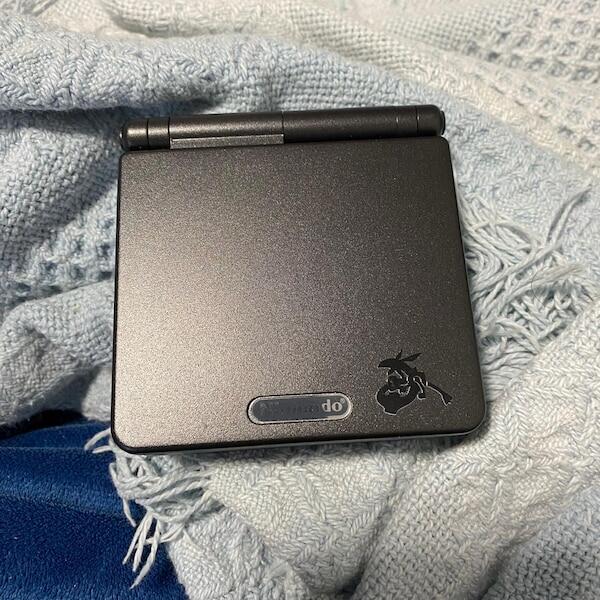

Collecting Nintendo handhelds in 2026 means picking between untouched originals, carefully refurbished units, and modded consoles built for daily play — not just display shelves. This guide ranks the seven handhelds worth chasing right now and tells you which one to buy first.
- Modded Game Boy Advance SP with an IPS V5 screen is the best overall Nintendo handheld to collect in 2026 for daily play and display.
- Original Game Boy Color is the cheapest entry point but ships with a reflective, non-backlit screen that's hard to read indoors.
- Nintendo DS Lite wins for dual-screen RPG collectors; Nintendo 3DS wins for the largest overall software library.
- Game Boy Micro drops Game Boy and Game Boy Color backward compatibility entirely, so treat it as a display piece, not a primary player.
Why this matters
Every Nintendo handheld released before 2010 is now old enough that its original screen, battery contacts, and shell plastic have degraded to some degree. A console that looked fine in a photo in 2015 can arrive in 2026 with a dim screen, sticky buttons, or a battery door that no longer clicks shut.
That's the real risk in this category: you're not just buying a console, you're buying 20-plus years of wear you can't see until it's in your hands. Retrofit's modded Game Boy Advance SP consoles get tested before shipping and carry a 100 Day Warranty, which matters more here than in almost any other electronics category — there's no manufacturer support line to call when a 2003 shell develops a fault.
The rankings below weigh screen quality, condition, charging standard, and long-term library access over nostalgia alone.
What makes the best Nintendo handheld to collect
- Screen quality — IPS or backlit panels versus the original reflective screen that's nearly unreadable indoors.
- Condition and testing — button response, hinge tightness, and battery contacts after 20-plus years in circulation.
- Charging standard — USB-C beats a dead proprietary AC adapter or a stack of AA batteries.
- Form factor and durability — clamshell designs protect the screen in a bag; candy-bar shapes don't.
- Game library and backward compatibility — whether the handheld still plays older carts or locks you into one generation.
- Long-term collector value — production run size and how many clean units are actually left in 2026.
Nintendo handhelds compared, at a glance
| Handheld | Best for | Standout feature | Key limitation |
|---|---|---|---|
| Game Boy Advance SP (IPS V5 modded) | Best overall for daily play | IPS V5 screen plus USB-C charging in the original shell | Modded, not unmodified stock hardware |
| Game Boy Advance (IPS V5 modded) | Best original candy-bar form factor | IPS V5 mod fixes the notoriously dark stock screen | No clamshell to protect the screen |
| Game Boy Color (original) | Best budget nostalgia entry | Full original GB and GBC library in a pocket-sized shell | No backlight, reflective screen only |
| Nintendo DS Lite | Best dual-screen RPG library | Two backlit screens stock, GBA slot for backward compatibility | Proprietary charger, ageing hinge screws |
| Nintendo 3DS | Best largest overall library | Backward compatible with DS carts, autostereoscopic 3D display | Digital storefront no longer processes new purchases |
| Game Boy Micro | Best pocket-size rarity piece | Smallest Game Boy Advance shell with a bright stock backlit screen | Drops Game Boy and Game Boy Color compatibility |
| Nintendo DSi | Best downloadable extras | Built-in cameras, DSiWare library, larger screens than DS Lite | No GBA slot at all |
1. Game Boy Advance SP (IPS V5 modded): best Nintendo handheld for daily play and display
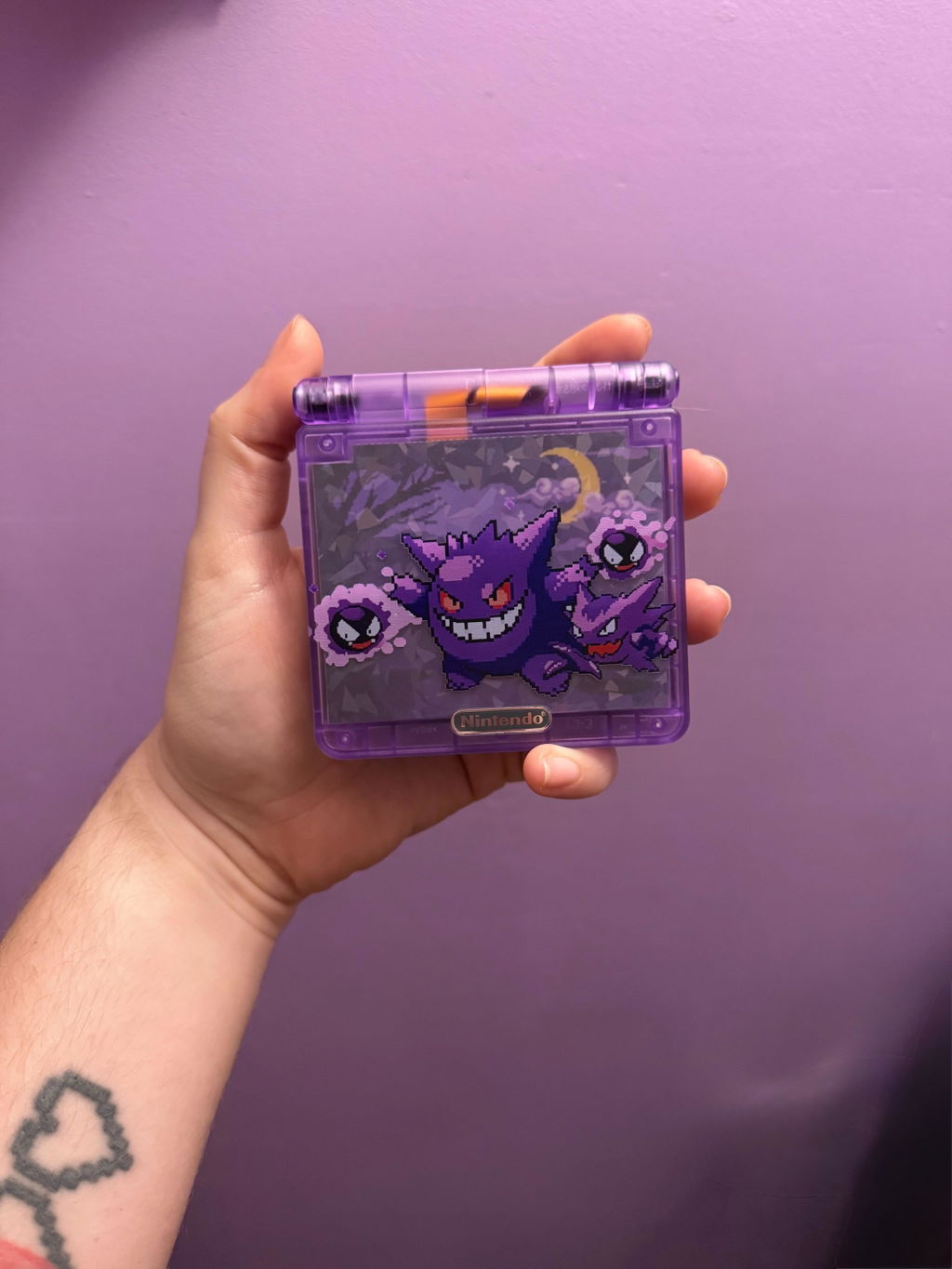
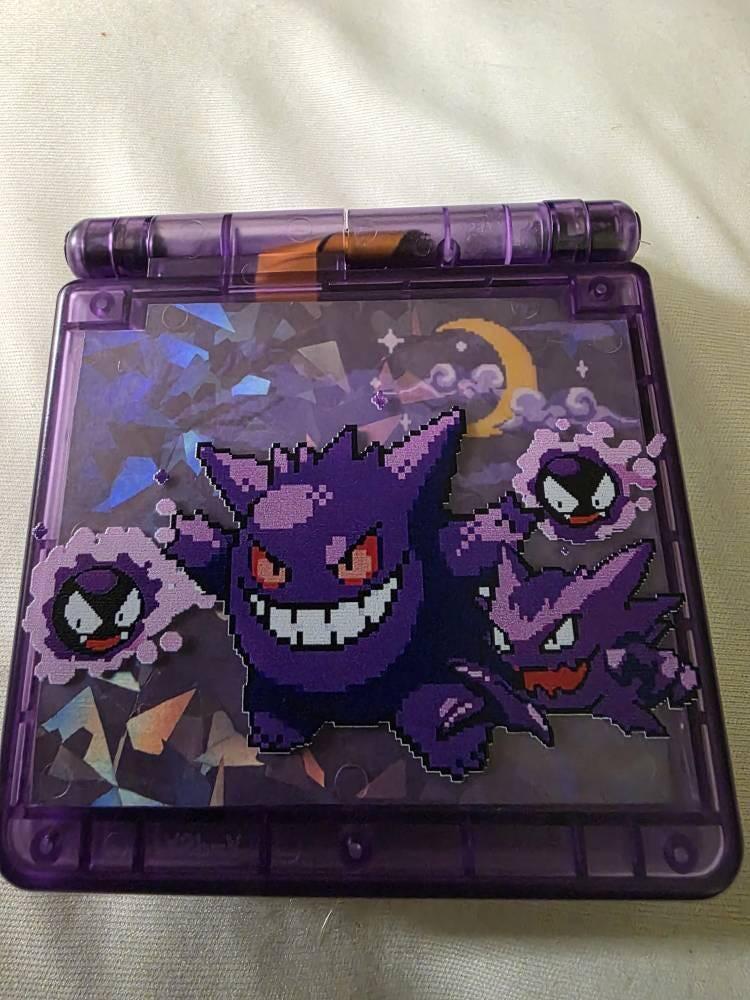
The Game Boy Advance SP launched in 2003 with a clamshell design that protects the screen when it's closed — a real advantage over the original GBA's exposed glass. A modded IPS V5 panel replaces the dim stock screen with a backlit, colour-accurate display readable in daylight and in bed, and USB-C charging replaces the original's proprietary barrel plug. Editions like the Zelda Triforce IPS V5 SP pair the mod with a themed shell for collectors who want both function and display value. For a deeper breakdown of the lineup, see the guide to the best Game Boy Advance SP consoles in 2026.
Game Boy Advance SP pros:
- IPS V5 screen is visibly brighter and sharper than any stock GBA SP panel
- USB-C charging means one cable for the whole household
- Clamshell shuts to protect the screen in transit
Game Boy Advance SP cons:
- No longer unmodified stock hardware, which matters to purist collectors
- Modded units cost more than an untested raw unit off a marketplace
- Library is GBA-only — no DS or 3DS titles
Best for: collectors who want a handheld they'll actually play in 2026, not just shelve.
Verdict: Buy.
2. Game Boy Advance (IPS V5 modded): best original candy-bar form factor
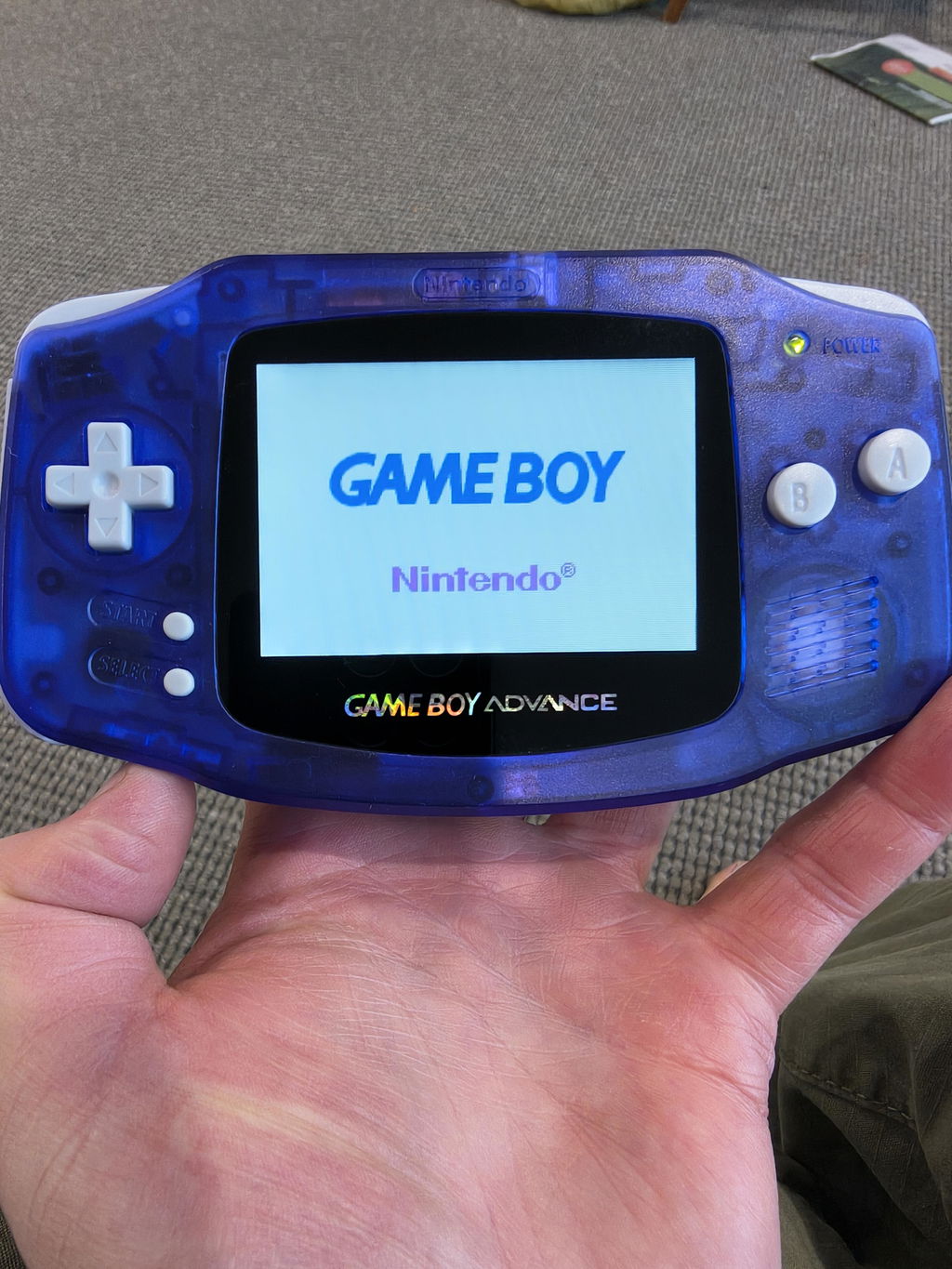
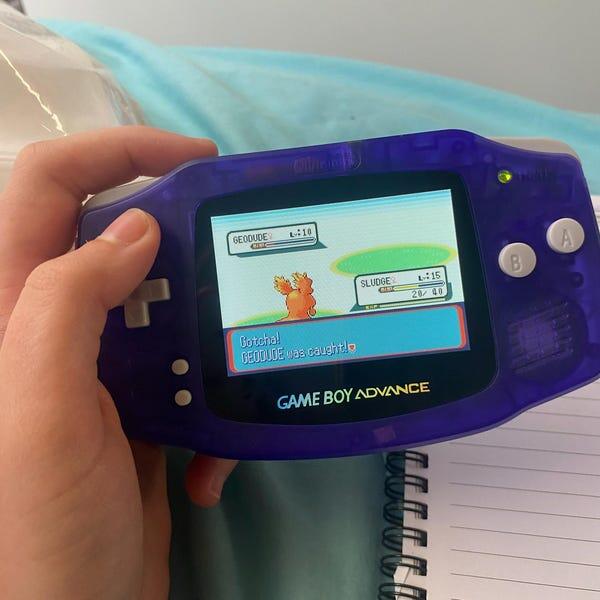
The original Game Boy Advance, released in 2001, has the flatter candy-bar shape some collectors prefer over the SP's clamshell. Its stock screen is notoriously dark without a light source, which is exactly why the IPS V5 mod matters here — it turns a console that was hard to use outdoors after dark into one that's readable anywhere. The atomic purple IPS V5 Game Boy Advance keeps the translucent shell aesthetic collectors want from that era.
Game Boy Advance pros:
- Larger d-pad and shoulder button feel than the SP
- IPS V5 mod fixes the single biggest complaint about the original hardware
- Translucent shell colourways are period-accurate to 2001
Game Boy Advance cons:
- No clamshell, so the screen is exposed in a bag without a case
- GBA-only library, same ceiling as the SP
- Clean original shells get harder to source every year
Best for: collectors who want the original GBA silhouette with a display that actually works.
Verdict: Buy.
3. Game Boy Color (original): best budget nostalgia entry point
The Game Boy Color is the cheapest realistic entry into serious Nintendo handheld collecting, and it plays the full original Game Boy and Game Boy Color library out of the box. It runs on 2 AA batteries and has no backlight — the reflective screen needs a light source to be readable, which is the same limitation the original GBA carried into 2001.
Game Boy Color pros:
- Lowest barrier to entry in this list
- Full backward compatibility with original Game Boy carts
- Genuinely pocket-sized, unlike anything that followed it
Game Boy Color cons:
- No backlight — unreadable in dim rooms without a lamp
- AA batteries add ongoing cost most other picks here don't have
- Shells commonly yellow with age (a known plastic issue on units this old)
Best for: first-time collectors testing whether they enjoy the hobby before spending more.
Verdict: Hold — buy one to start, but budget for a backlight mod later if you want to actually play it at night.
4. Nintendo DS Lite: best dual-screen RPG library
Released in 2006, the Nintendo DS Lite shipped with two backlit screens from the factory — no mod required — plus a slot-2 GBA cartridge port that gives it partial backward compatibility. It's the pick for anyone chasing the DS era's stylus-driven RPGs and puzzle games alongside a GBA library.
Nintendo DS Lite pros:
- Backlit dual screens stock, no mod needed to read them at night
- GBA slot adds a second console's library to the same unit
- Clamshell hinge is more durable than the original DS
Nintendo DS Lite cons:
- Proprietary charger, not USB-C
- Hinge screws loosen with age on well-used units
- Touch screen scratches are common on units without a protector
Best for: collectors building out a DS-era RPG and puzzle library.
Verdict: Buy.
5. Nintendo 3DS: best largest overall library
The Nintendo 3DS, released in 2011, is backward compatible with the entire Nintendo DS library and adds its own catalogue plus an autostereoscopic 3D display that needs no glasses. It has the deepest total software library of anything on this list once you count DS compatibility.
Nintendo 3DS pros:
- Plays the entire DS library plus its own catalogue
- 3D slider is a genuine hardware feature, not a gimmick add-on
- Larger screens than DS Lite or DSi
Nintendo 3DS cons:
- The digital storefront no longer processes new purchases, so physical carts matter more now
- Analog circle pad wear is a common issue on used units
- Bulkier than every other handheld in this list
Best for: collectors who want one console covering two full console generations.
Verdict: Buy.
6. Game Boy Micro: best pocket-size rarity piece
The Game Boy Micro, released in 2005, is the smallest console in the entire Game Boy Advance family and the only one with a bright backlit screen stock. Nintendo cut Game Boy and Game Boy Color compatibility to hit that size, so it only plays GBA carts.
Game Boy Micro pros:
- Genuinely pocket-sized in a way no other handheld here matches
- Bright, clear stock screen with no mod needed
- Swappable faceplates add a collecting angle of their own
Game Boy Micro cons:
- No Game Boy or Game Boy Color backward compatibility at all
- Short original production run makes clean units scarce in 2026
- Small screen limits comfort for longer play sessions
Best for: display-case collectors chasing GBA-family rarity.
Verdict: Buy for the shelf, skip if you need it as your main player.
7. Nintendo DSi: best downloadable extras
The Nintendo DSi, released in 2009, added built-in cameras and a DSiWare download library, plus larger screens than the DS Lite. Nintendo removed the GBA slot entirely to do it, so it loses that backward compatibility path.
Nintendo DSi pros:
- Larger screens than DS Lite
- Built-in cameras and DSiWare library add functionality beyond gaming
- Two SD-card-era storage options for downloaded content
Nintendo DSi cons:
- No GBA slot, so the second-console compatibility disappears
- DSi's download storefront has since been discontinued
- Battery life is shorter than DS Lite due to the brighter screens
Best for: collectors specifically after the camera and DSiWare features.
Verdict: Hold — a nice-to-have, not essential unless the multimedia extras matter to you.
Browse modded GBA SP consoles
IPS V5 screens, USB-C charging, tested before dispatch.
How we ranked these
Each handheld was weighed against the six criteria above: screen quality, condition risk, charging standard, form factor, library access, and long-term collector value. No handheld wins every category — the DSi loses GBA compatibility for cameras, the 3DS trades portability for its library size, and the Micro trades software access for pure rarity. That's why this reads as a decision tree by use case, not a single leaderboard.
“If a handheld still runs its original reflective screen, budget for a backlight mod before you treat it as a daily player.”
Which Nintendo handheld should you collect first in 2026?
If you want one console to actually use every day in 2026, the Game Boy Advance SP with an IPS V5 mod is the default pick — clamshell protection, USB-C charging, and a screen that doesn't need a lamp. If budget is the constraint, start with an original Game Boy Color and mod it later. If your priority is software depth over form factor, the Nintendo 3DS covers two console generations in one unit. Everything else on this list earns its spot for a specific use case, not because it beats the others outright.
FAQ
What is the best Nintendo handheld to collect in 2026?
The Game Boy Advance SP with a modded IPS V5 screen is the best overall pick for 2026 collecting because it combines a backlit display, USB-C charging, and clamshell screen protection in the original shell.
Is a modded Game Boy Advance SP better than an original one?
For daily use, yes — the stock GBA SP screen is dim without a mod, while an IPS V5 upgrade adds brightness and colour accuracy plus USB-C charging that the original AGS-101 hardware never had.
Is the Nintendo DS Lite worth collecting in 2026?
Yes, if you want dual-screen RPGs and puzzle games. It has backlit screens stock and a GBA slot for partial backward compatibility, though its charger is proprietary, not USB-C.
Does the Game Boy Micro play Game Boy Color games?
No. Nintendo removed Game Boy and Game Boy Color compatibility from the Game Boy Micro to achieve its smaller size, so it only plays Game Boy Advance cartridges.
Why doesn't the original Game Boy Color have a backlight?
It was built in an era before backlit handheld screens were standard, so its reflective LCD needs an external light source to be readable, unlike later modded consoles.
Is the Nintendo 3DS still worth buying for its digital library in 2026?
The 3DS digital storefront no longer processes new purchases, so collecting for it in 2026 means prioritising physical cartridges over eShop downloads.
What should I check before buying a used Nintendo handheld?
Check screen brightness, button response, hinge tightness on clamshell models, and battery contact corrosion — these are the most common failure points on handhelds over 15 years old.
One last thing
The detail most new collectors miss: charging standard matters more than nostalgia value once you own more than two or three handhelds. A shelf of Game Boy Advance SP units on USB-C charges from one cable and one power bank; a shelf mixing DS Lite, 3DS, and DSi chargers means hunting for three different proprietary bricks every time a battery dies in 2026.