
Best overall: Kirby: Nightmare in Dream Land. Best for confident readers: Pokémon FireRed or LeafGreen. Best for quick play: WarioWare, Inc.: Minigame Mania. These are the strongest starting points among the best Gameboy Advance games for kids in 2026; the right choice depends on reading ability, button control and tolerance for retries.
- Kirby: Nightmare in Dream Land leads the best Gameboy Advance games for kids with forgiving movement and little required reading.
- Pokémon FireRed and LeafGreen suit confident readers who enjoy collecting, exploration and turn-based battles.
- WarioWare, Inc.: Minigame Mania suits quick sessions, but its changing instructions demand fast reactions.
- Retrofit sells refurbished Game Boy Advance consoles; choose the game separately from the console's themed shell.
Why this matters
A familiar character does not automatically make a game easy. Pokémon asks children to read menus and remember objectives; Mario asks them to judge jumps while enemies move. Match the task to the child, not the artwork on the cartridge.
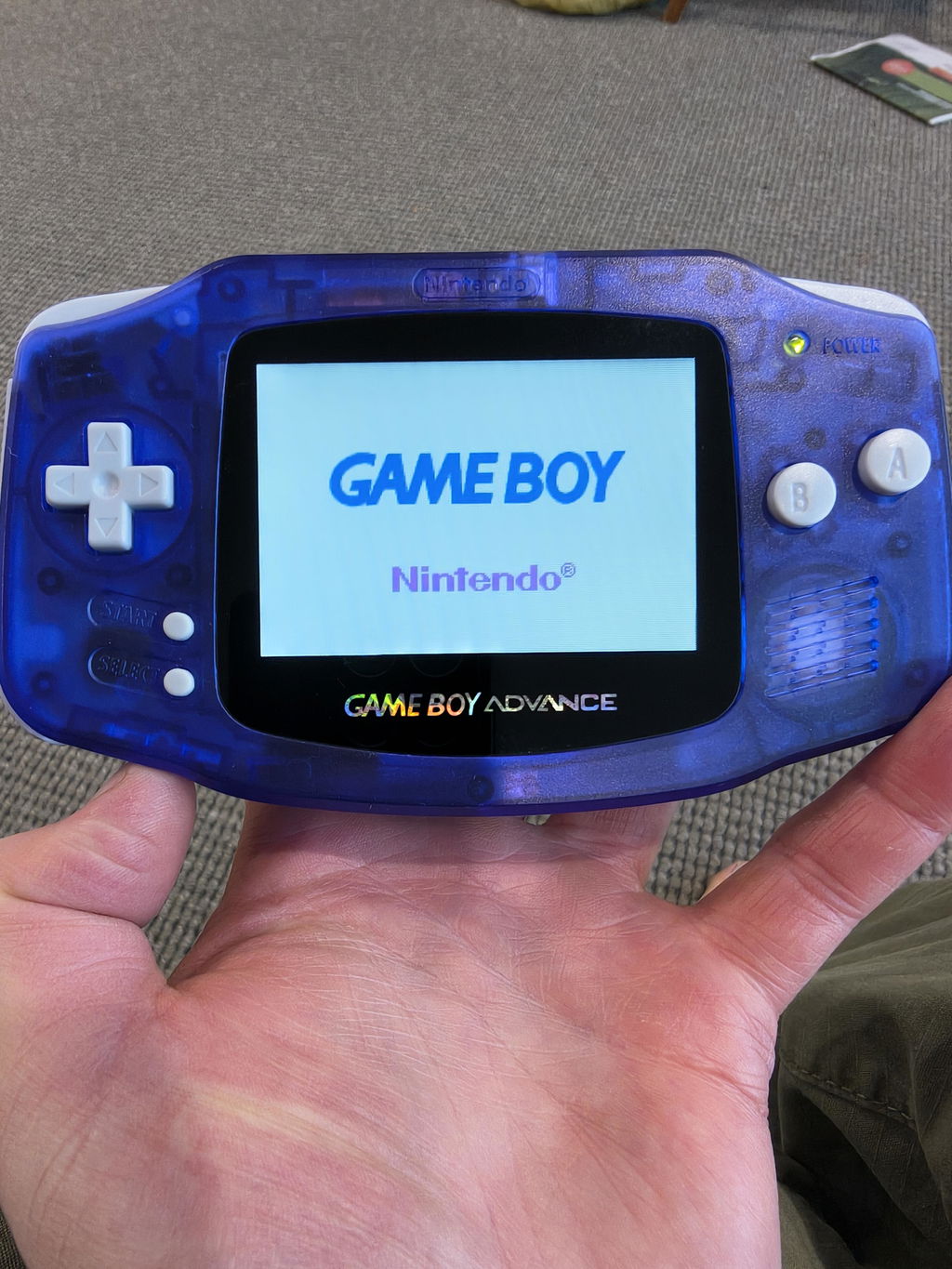
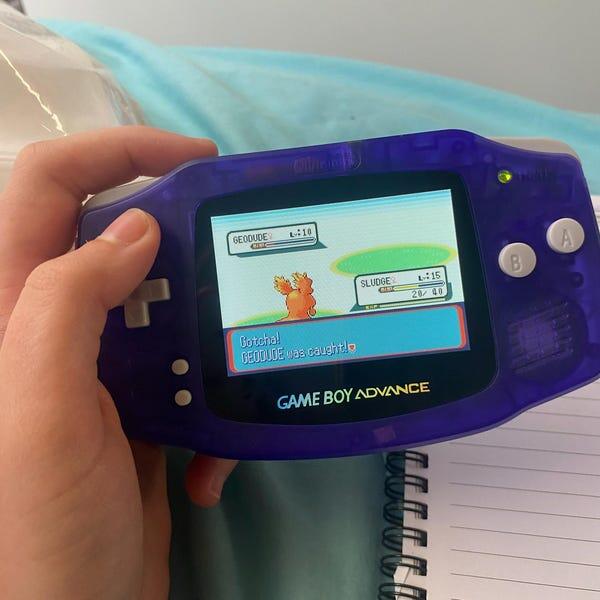
For a family starting with original hardware in 2026, Retrofit sells professionally refurbished and modded Game Boy Advance and GBA SP consoles. Hardware condition and game suitability are separate decisions. A clearer display helps you see the game, but it does not remove difficult jumps or simplify dialogue.
Start with a game your child can understand without constant intervention. Add a harder adventure once the controls and saving routine feel familiar.
What makes the best Game Boy Advance games for kids?
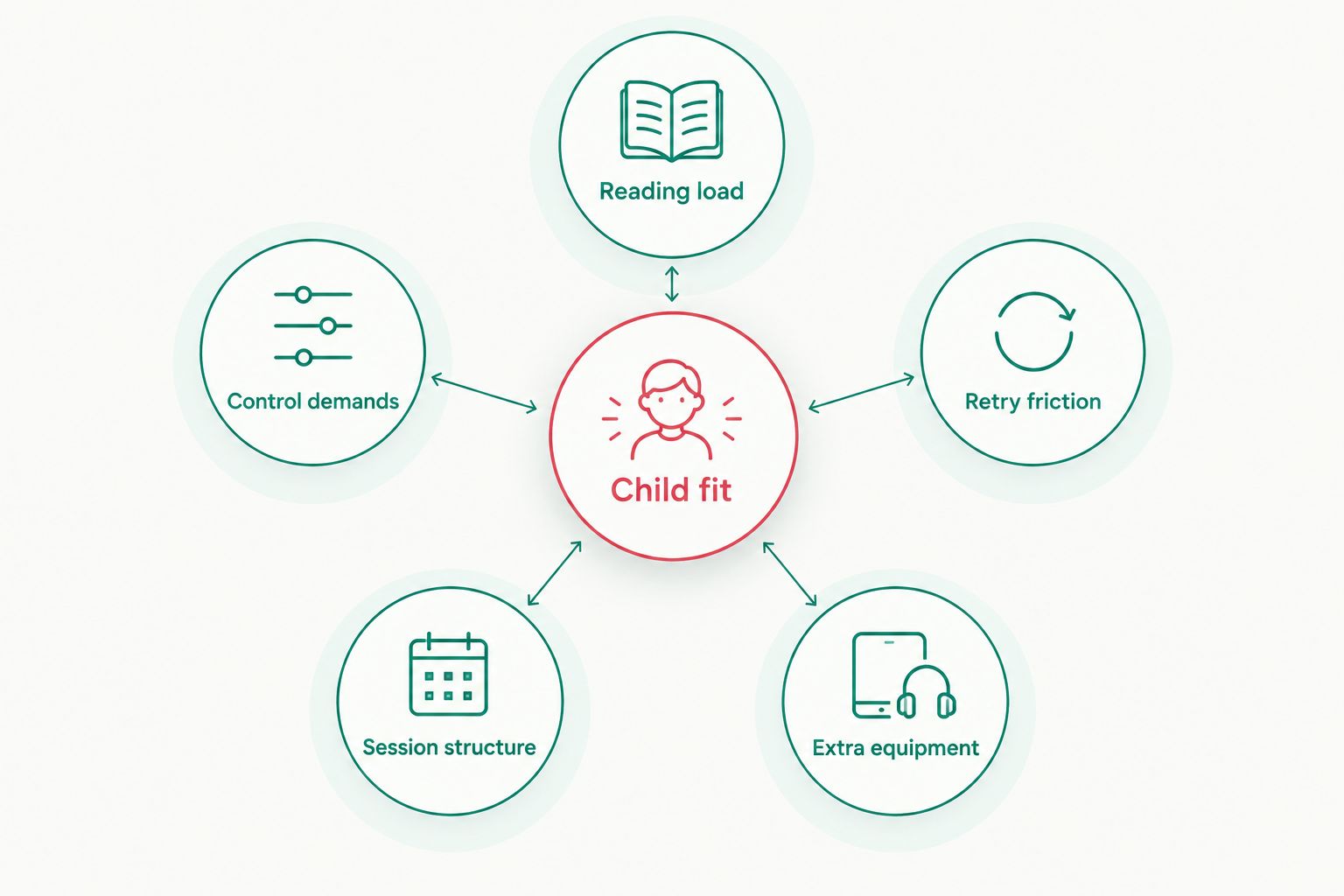
Use these criteria to judge child fit before choosing a cartridge:
- Reading load: Can your child understand instructions, menus and objectives independently?
- Control demands: Does the game require precise jumps, rapid reactions or several actions together?
- Retry friction: Does a mistake lead to a manageable retry or a frustrating loss of progress?
- Session structure: Can you finish a stage, race or saved task before putting the console away?
- Extra equipment: Does the intended multiplayer mode need another console, cartridge or accessory?
Reading load matters more than a character's popularity. Control demands matter more than whether the box looks cheerful. Watch your child attempt an ordinary stage or task before deciding that a game is suitable.
Best kids' GBA games at a glance
| Game | Best for | Standout feature | Key limitation |
|---|---|---|---|
| Kirby: Nightmare in Dream Land | First platform game | Floating helps you correct missed jumps | Later stages and bosses still demand timing |
| Pokémon FireRed / LeafGreen | Confident readers | Turn-based battles give you time to choose | Dialogue, menus and objectives require reading |
| Super Mario Advance 2: Super Mario World | Building platform skills | Branching routes and repeatable stages | Precise jumps and limited lives create pressure |
| Mario Kart: Super Circuit | Racing and family competition | Short races and familiar item-based racing | Multiplayer requires compatible equipment |
| WarioWare, Inc.: Minigame Mania | Quick play | Rapid, varied microgames | Instructions change quickly |
| The Legend of Zelda: The Minish Cap | Puzzle-led exploration | Shrinking changes how you explore | Progress depends on reading clues and solving puzzles |
| Super Mario Advance 3: Yoshi's Island | Careful, exploratory platforming | Flutter jumps and egg throwing | Escort mechanics and aiming add complexity |
The table separates use cases rather than pretending every child needs the same game. For your first purchase in 2026, favour independence over the longest adventure or the most recognisable franchise.
1. Kirby: Nightmare in Dream Land: best for a first platform game
Kirby: Nightmare in Dream Land is a side-scrolling platform game built around jumping, floating and copying enemy abilities. Floating gives you a way to recover when a jump falls short. That makes learning movement less punishing than a platformer that immediately drops you into a pit.
You can understand much of the action visually. There is less dependence on dialogue than in the role-playing and adventure games below, although a parent should still explain the controls and ability system.
Kirby: Nightmare in Dream Land pros:
- Floating offers room to correct movement mistakes.
- Copy abilities encourage experimentation.
- Stages provide clear, repeatable goals.
Kirby: Nightmare in Dream Land cons:
- Boss battles still require timing and pattern recognition.
- Changing abilities introduces controls a beginner must learn.
Best for: Children learning directional movement, jumping and basic combat.
Verdict: Buy Kirby: Nightmare in Dream Land as the default first game. It teaches useful platform skills without making precise jumping the only route forward.
2. Pokémon FireRed / LeafGreen: best for confident readers
Pokémon FireRed and LeafGreen combine exploration, creature collecting and turn-based battles. During a battle, you choose an action rather than racing to press a button before an enemy attacks. The slower decision-making suits children who enjoy planning more than rapid movement.
Reading is the real entry requirement. Your child needs to follow dialogue, understand move descriptions and remember where to go next. Choose either version as a starting point; you do not need both to begin the main adventure.
Pokémon FireRed / LeafGreen pros:
- Turn-based combat gives you time to consider choices.
- Collecting gives exploration a clear purpose.
- Manual saving supports stopping between activities.
Pokémon FireRed / LeafGreen cons:
- Menus and story directions create a substantial reading load.
- Trading requires compatible equipment; it is not a single-console activity.
For a standard wired trade, you need 2 compatible consoles, compatible games and a suitable GBA link cable. Treat trading as an optional family setup, not a prerequisite for enjoying the main story.
Best for: Independent readers who like collecting and gradual progress.
Verdict: Buy Pokémon FireRed or LeafGreen for a child who reads comfortably; hold for a child who needs every menu read aloud.
3. Super Mario Advance 2: best for building platform skills
Super Mario Advance 2 brings Super Mario World to the GBA. You run, jump, use power-ups and explore a map with branching routes. It is a good next step after your child understands basic platform controls.
The attraction is learning through repetition. A familiar stage lets your child practise the same jump or enemy encounter, then attempt a new route. Avoid treating every missed jump as a reason to take over the console.
Super Mario Advance 2 pros:
- Repeatable stages support deliberate practice.
- Power-ups change how you approach obstacles.
- Secret routes reward observation and exploration.
Super Mario Advance 2 cons:
- Moving platforms and pits demand accurate timing.
- Losing lives adds pressure for a frustrated beginner.
Best for: Children who already enjoy platformers and want a greater movement challenge.
Verdict: Buy Super Mario Advance 2 after basic jumping feels comfortable; hold as a first game for a child who dislikes retries.
4. Mario Kart: Super Circuit: best for racing and family competition
Mario Kart: Super Circuit offers kart racing with character selection, items and compact race events. A race gives you a clear finish line without requiring a long chain of story objectives. Single-player racing works without setting up a multiplayer session.
For family play, check the equipment before promising a shared race. The game supports up to 4 players through compatible GBA link-cable connections, and single-cartridge multiplayer has restrictions compared with a multi-cartridge setup.
Mario Kart: Super Circuit pros:
- Races have a clear beginning and end.
- Driving requires less sustained reading than a story adventure.
- Items add variety to repeated races.
Mario Kart: Super Circuit cons:
- Steering, drifting and track edges take practice.
- Linked play adds consoles, cables and setup decisions.
Best for: Children who prefer racing to dialogue, plus families prepared to arrange local multiplayer.
Verdict: Buy Mario Kart: Super Circuit for racing; hold the multiplayer promise until you have checked the complete setup.
5. WarioWare, Inc.: Minigame Mania: best for quick play
WarioWare, Inc.: Minigame Mania presents a sequence of very short microgames. Each asks you to recognise a task and respond quickly, then moves to another challenge. It is a different kind of quick play from finishing a conventional platform stage.
The variety is the benefit and the obstacle. Children who enjoy surprise tasks have plenty to react to, but those who need time to read or process instructions face extra pressure. Brief does not mean easy.
WarioWare, Inc.: Minigame Mania pros:
- Frequent changes keep the activity varied.
- Simple individual tasks make replay approachable.
- Short challenges suit brief play sessions.
WarioWare, Inc.: Minigame Mania cons:
- Fast instructions disadvantage slower readers.
- Increasing speed leaves little time to work out an unfamiliar task.
Best for: Children who process visual prompts quickly and enjoy reaction-based games.
Verdict: Buy WarioWare, Inc.: Minigame Mania for quick reactions; skip it as the first choice for a child who needs unhurried instructions.
6. The Legend of Zelda: The Minish Cap: best for puzzle-led exploration
The Legend of Zelda: The Minish Cap combines exploration, combat and environmental puzzles. Link's ability to shrink changes how you move through familiar spaces and reach new areas. It rewards noticing details rather than simply reaching the right edge of a stage.
Choose it for a child who enjoys asking what an object does or where a path leads. Expect occasional shared problem-solving. Dialogue and clues are part of the game, not optional decoration.
The Minish Cap pros:
- Environmental puzzles reward observation.
- New tools change how you explore.
- Manual saving supports planned stopping points.
The Minish Cap cons:
- Unclear next steps frustrate children who want constant direction.
- Combat and puzzle-solving place different demands on the player.
Best for: Patient readers who enjoy exploration and solving problems.
Verdict: Buy The Minish Cap for a curious puzzle-solver; hold for a child who wants a simple, obvious route through every stage.
7. Super Mario Advance 3: best for exploratory platforming
Super Mario Advance 3 brings Yoshi's Island to the GBA. Yoshi uses a flutter jump, swallows enemies and throws eggs while carrying Baby Mario through platform stages. The flutter jump helps adjust landings, while collectibles encourage a slower look around.
It is not simply an easier version of Mario. Aiming eggs adds another skill, and losing Baby Mario triggers a rescue timer. Start by finishing stages rather than insisting on collecting everything.
Super Mario Advance 3 pros:
- Flutter jumping gives you extra landing control.
- Egg throwing adds puzzle and aiming tasks.
- Collectibles reward careful exploration.
Super Mario Advance 3 cons:
- Recovering Baby Mario introduces time pressure.
- Full completion is more demanding than reaching the exit.
Best for: Children who enjoy exploring platform stages rather than rushing through them.
Verdict: Buy Super Mario Advance 3 for exploration; hold if timed recovery already frustrates your child.
How these games are ranked
This 2026 ranking prioritises understandable controls, manageable reading and a clear reason to choose each game. Kirby leads because floating and visually understandable action make it a strong introduction. Pokémon, racing and puzzle adventures occupy separate slots because they suit different abilities.
These are editorial recommendations based on the games' established mechanics, not measured completion times or a child-testing study. Your child's response to an ordinary gameplay section is the deciding check.
Choose the console separately from the game
Retrofit's refurbished Game Boy Advance consoles suit families seeking original Nintendo hardware with an upgraded display. Retrofit offers IPS V5 screen-equipped consoles, USB-C charging options and repair or upgrade services; check the specifications of the individual console you choose.
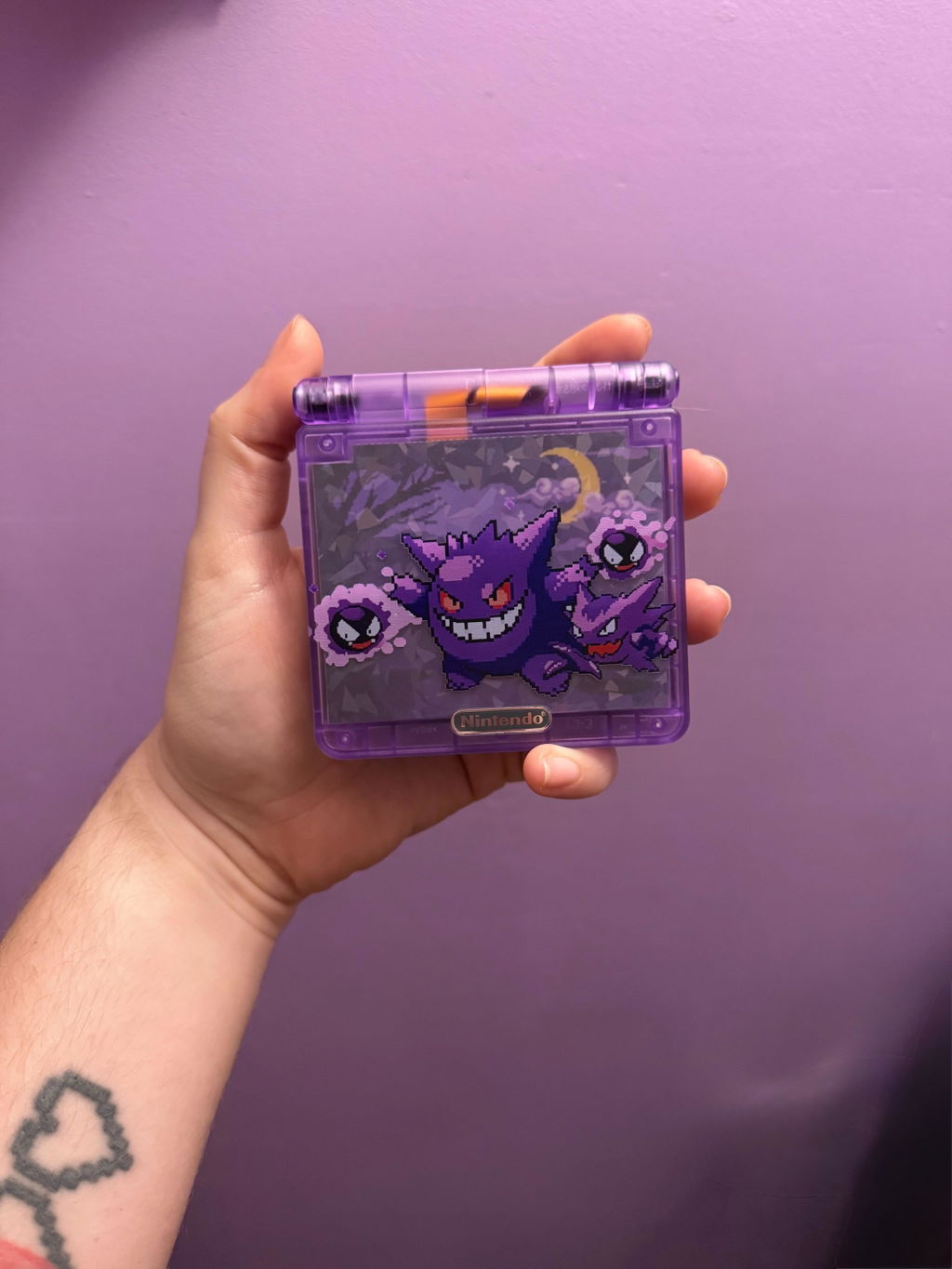
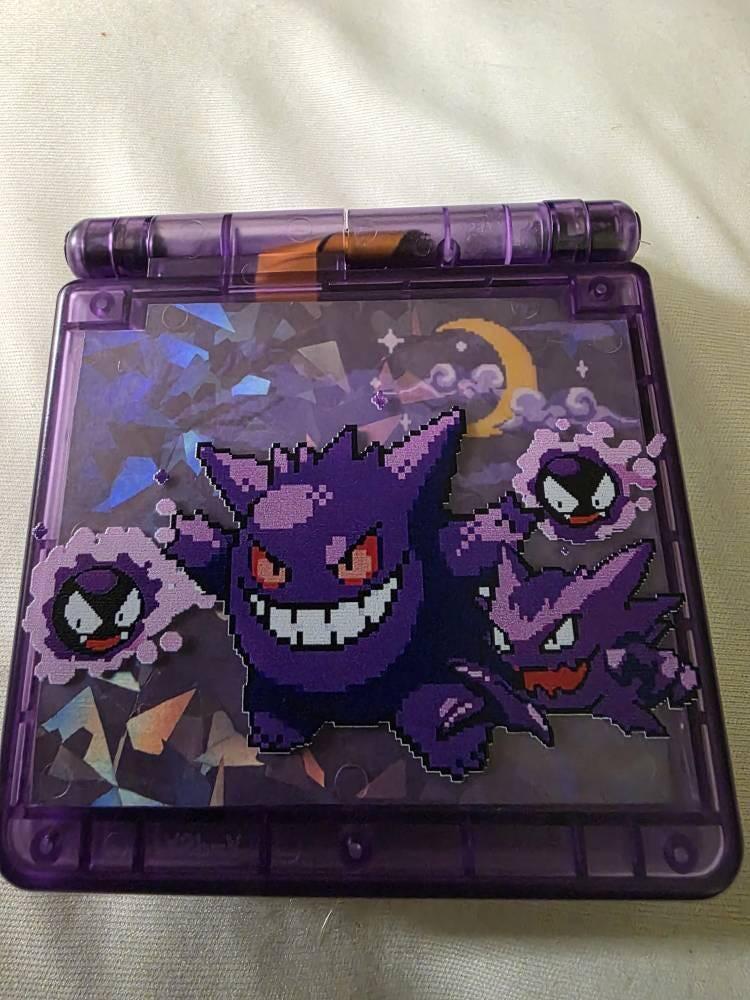
A themed shell is not evidence that a game comes included. Before gifting a console in 2026, confirm the cartridge arrangement and practise saving with your child. The guide to playing a Game Boy Advance SP without a cartridge explains that distinction.
An unmodified original GBA uses 2 AA batteries, while a GBA SP uses a rechargeable battery. Modified power systems differ, so use the instructions for the actual console rather than assuming every GBA charges the same way.
Which kids' GBA game should you choose?
Choose Kirby: Nightmare in Dream Land if you want one dependable starting recommendation. Pick Pokémon FireRed or LeafGreen instead when your child reads independently and prefers collecting to precise jumping.
For your 2026 shortlist, choose Mario Kart: Super Circuit for racing, WarioWare for rapid tasks, or The Minish Cap for puzzles. Leave the more demanding platform games until your child enjoys practising movement rather than merely tolerating it.
FAQ
What's the best Game Boy Advance game for a child starting out?
Kirby: Nightmare in Dream Land is the strongest default for a first platform game. Floating helps correct missed jumps, and the action depends less on reading than Pokémon or Zelda.
Which GBA games are good for kids who cannot read independently?
Kirby: Nightmare in Dream Land and Mario Kart: Super Circuit are better starting points than dialogue-heavy adventures. A parent should still explain the controls and menus; neither choice removes the need to learn how the game works.
Is Pokémon FireRed better than LeafGreen for kids?
Neither version is a universally better children's starting point. FireRed and LeafGreen share the same core adventure and turn-based structure, with differences including version-exclusive Pokémon.
Can a child play Mario Kart: Super Circuit alone?
Yes, Mario Kart: Super Circuit has single-player racing. Multiplayer is optional and requires compatible consoles and link equipment.
Is The Minish Cap too difficult for a beginner?
The Minish Cap is a less direct starting choice than Kirby because it combines reading, exploration, puzzles and combat. It suits a patient child who enjoys working out where to go, with a parent available for occasional help.
Do these games work on both a Game Boy Advance and a GBA SP?
Yes, the GBA cartridges for all the games listed work on both a Game Boy Advance and a Game Boy Advance SP. Check the cartridge's condition and confirm that the console reads it correctly.
Does a Pokémon-themed Retrofit console include Pokémon games?
A Pokémon-themed console name does not establish that a Pokémon cartridge is included. Check the individual listing's contents before buying; shell artwork and included software are separate details.
One last thing
Check the save function before wrapping a used cartridge as a gift. For a game that supports saving, create a save, switch the console off after saving finishes, then restart and confirm that progress returns. A game that boots but loses progress is not ready for a child's adventure.